Anaesthesiology
General and regional anaesthesia in paediatric surgery
Overview
National Scientific and Practical Centre for Paediatric Surgery
"Academician Natalia Gheorghiu"
Anaesthesia Unit
Contact phones: (+373 22) 55-96-61
Head of unit – Serghei Malanco
Unit profile:
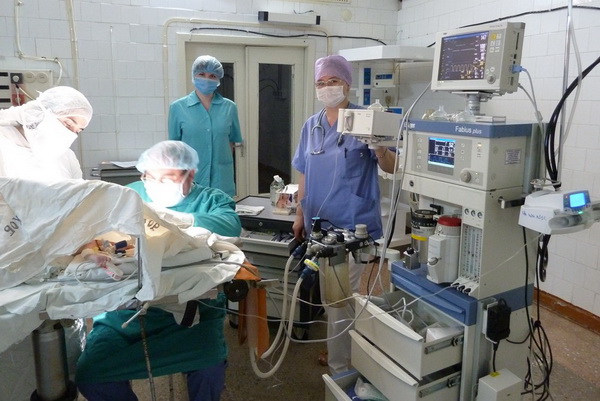
The anaesthesia service is part of the Paediatric Surgery Clinic and provides planned and emergency anaesthesia to children from the Republic of Moldova around the clock (24/7) in the following units:
- Orthopaedics, spinal surgery and traumatology
- Urology
- Neonatal surgery
- Neurosurgery
- General surgery (thoraco-abdominal and surgical correction of congenital malformations)
- Emergency surgery and diagnostics
- Septic surgery
- Intensive Care, Toxicology and Acute Haemodialysis Unit
- Chronic haemodialysis
- Endoscopy unit
- Imaging unit
- Wards of the Paediatric Clinic
for surgical treatment and instrumental and imaging examinations (laparoscopy, gastroscopy, bronchoscopy, colonoscopy, cystoscopy, computed tomography, MRI, etc.)
24/7 advisory and treatment services through the National AVIA-SAN Air Ambulance Service in paediatric anaesthesia, intensive care and toxicology.
Angela Maniuc – attending doctor, highest category, doctoral student
Every year the anaesthesia unit cares for 6,000 patients aged 0–18. The anaesthetists carry out a comprehensive assessment of each patient, decide on the best timing for the operation or procedure, and set an individual programme and method of general anaesthesia case by case, with minimal impact on vital functions and maximum preservation of hormonal balance and homeostasis. Modern anaesthesia is based on safe methods but, like other medical disciplines, is not free of complications, even when performed accurately, precisely and competently. Before anaesthesia, great attention is paid to the function of all vital organs and systems, with prevention and immediate correction of any changes during anaesthesia and surgery.
In the early post-operative period, patients are monitored continuously for possible complications.
In recent years the surgical anaesthesia unit has completely renewed its anaesthetic equipment, techniques and intra-operative monitoring of vital functions, equipping the service with latest-generation devices in line with European and international patient safety standards. The reduction in intra-anaesthetic complications and safe recovery after anaesthesia are the result of the doctors' professionalism, built on a strategy of raising professional standards through educational programmes supported by the Society of Anaesthesia and Intensive Care of the Republic of Moldova, the European Society of Anaesthesiology (ESA), and donations from Pro Humanitate, Dräger, the German Embassy in Moldova and the German Ministry of Health, the Government of Japan (modern equipment through the JICA programme) and the Government of Switzerland (REPEMOL programme).
Lidia Dolghieru – staff member of the Nicolae Testemițanu SUMPh, PhD in medicine, associate professor
Distinguished medical figures who have worked in the surgical anaesthesia unit include Professor Boris Pîrgari, Dr Hab. Med., Dr Tamara Bivol (Romania) and Dr Valentina Latîcevschi (head of unit 1983–2007).
Valentina Latîcevschi, Elina Malicovschi, Corneliu Maruşciac, Larisa Rezneac and Lidia Dolghier defended their doctoral theses based on work in the unit.
Representatives of the Moldovan school of paediatric anaesthesia work abroad: Elina Malicovschi (Russia), Ludmila Dostovalova (Yemen), Corneliu Maruşceac (Italy), Gabriela Munteanu (Israel) and Serghei Ivancev (USA, Canada).
Over the past 30 years, 1 habilitation thesis and 5 doctoral theses have been defended based on the unit's work, and a doctoral thesis on modern anaesthesia care for newborns is currently being completed (Angela Maniuc).
Alexei Berbeca – attending doctor, highest category
Clinical work in the anaesthesia unit is carried out by:
· Serghei Malanco – head of unit, highest category
· Lidia Dolghieru – staff member of the Nicolae Testemițanu SUMPh, PhD in medicine, associate professor
· Ivan Volovodenco – attending doctor, highest category
· Anastasia Glijinschi – attending doctor, highest category
· Angela Maniuc – attending doctor, highest category, doctoral student
· Valeriu Neamţu – attending doctor, highest category
· Nicolae Baculea – assistant lecturer at the Nicolae Testemițanu SUMPh, highest category
· Alexei Berbeca – attending doctor, highest category
· Olesea Ţurcan – attending doctor, 2nd category
· Egor Erşov – attending doctor, 2nd category
· Liliana Foltea – attending doctor, 2nd category
The unit's anaesthetic nurses are a young, highly qualified team with in-depth knowledge of modern paediatric anaesthesia practice and technologies and of operating the latest anaesthetic equipment.
Unit staff are skilled in modern anaesthesia and intensive care methods and continually develop their skills through national, international and European programmes. The unit's doctors have completed placements and special training in Romania, France, Russia, Ukraine, Switzerland, Austria and Israel.
The paediatric anaesthesia service of the "Academician Natalia Gheorghiu" Paediatric Surgery Clinic is part of a programme to develop anaesthesia care to European standards in theory, practice, technology and instruments.
Information for parents and patients
Information for parents and patients (Russian version below)
Institutional form adopted for the Paediatric Anaesthesia and Intensive Care Department of the PMSI IMC under Annex 2 to Ministry of Health Order No. 861 of 30.07.2013 "On approving the Standardised Clinical Protocol in Anaesthesia"
Information sheet for the child's legal representatives on anaesthesia for surgery or diagnostic and therapeutic procedures.
DEAR PARENTS / LEGAL GUARDIANS! Please read this information and the questionnaire. Prepare for the mandatory discussion with the anaesthetist.
Painful and traumatic examinations and treatments in children are performed with anaesthesia – to relieve pain and emotional stress and to protect and maintain vital functions (breathing, circulation), organs and systems. This specialised care is the responsibility of the anaesthetist who, together with the surgeon, ensures your child's safety.
The following types of anaesthesia are used in children:
General anaesthesia
It removes consciousness and the perception of pain throughout the body. From the start to the end of the operation, the patient is in a calm state similar to deep sleep.
Before anaesthesia, sedative (calming) and preventive medicines are given in various ways: intramuscularly, intravenously, intranasally, orally or rectally.
The type of general anaesthesia is chosen according to the length and extent of the operation or procedure:
· Inhalational (breathing a volatile anaesthetic vapour through a face mask with oxygen)
· Intravenous (injecting the medicine(s) through a micro-catheter into a vein)
· A combination of inhalational and intravenous anaesthesia
· For short, non-traumatic procedures, the patient may breathe on their own (spontaneously)
· For longer, traumatic procedures that require muscle relaxation or difficult positions and sites, the patient's breathing is controlled (artificial) through a special tube placed in the airway. Ventilation is done by hand or with a special anaesthetic machine. This method gives the patient a high level of safety (good oxygenation, lung protection, and prevention of airway blockage by mucus or vomit).
Regional anaesthesia (spinal, epidural, caudal, nerve block)
It removes the sensation of pain in the parts of the body being operated on. In spinal, epidural or caudal anaesthesia, the nerves leading to the spinal cord are anaesthetised.
In children, regional anaesthesia is usually combined with general anaesthesia.
Choosing the type of anaesthesia
The anaesthetist will review all clinical and laboratory data, the extent of the operation or procedure, and the advantages and disadvantages, and will propose an individual anaesthesia plan for your child.
No procedure is without risk!
Anaesthetic accidents (complications), from mild to severe and life-threatening such as cardiac arrest, are very rare, even in children in poor health. Today's anaesthesia is based on clear methods and allows precise dosing and combination of different anaesthetic agents. Modern anaesthetic equipment allows good control of the depth of anaesthesia and monitoring of breathing, circulation and other vital functions. This control optimises anaesthesia, prevents accidents and minimises risks throughout the procedure and anaesthesia.
Please follow these instructions
For planned procedures, a meeting between the parents or legal guardian and the anaesthetist is mandatory in order to:
· Assess the severity of the illness and any other conditions
· Assess the child's general condition
· Assess individual factors that could lead to complications during surgery and anaesthesia
· Assess the level of anaesthetic risk
· Explain the proposed anaesthetic method and any need for pre-operative preparation or additional instrumental or laboratory tests
· Inform the person caring for the child about the pre-operative regime (behaviour, eating and drinking, enema, etc.)
· Inform you about the possible need for transfusion of blood products or components.
These important steps can minimise or prevent accidents and complications during anaesthesia and ensure the highest level of safety for your child.
If the child's legal representatives are absent, or in an emergency, the decision on surgery and anaesthesia may be taken by a panel of 3 specialist doctors.
You have the full right to receive information about:
· The recommended type of anaesthesia and all procedures needed to carry it out for the planned operation or procedure
· Giving or withholding your consent to a particular type of anaesthesia, transfusion of blood components or other procedures.
· The benefits and possible risks you have been informed about in advance.
The purpose of this notice is not to alarm or distract you; the aim of informed consent to anaesthesia is to make sure the child's legal representatives are fully aware when making decisions about your child's health.
PRE-ANAESTHESIA QUESTIONNAIRE
Yes — No
Has your child had operations under anaesthesia before?
Has your child had complications related to anaesthesia?
Have members of your family had complications related to anaesthesia?
Is your child's growth and development normal?
Has your child had breathing problems or blue lips during physical activity?
Does your child snore at night?
In the last three weeks, has your child had flu, bronchitis or other respiratory infections?
Have your child or members of your family had neuromuscular diseases?
Have you noticed bruises appearing on your child for no reason?
Have your child or members of your family had bleeding problems after simple cuts or operations that were hard to stop?
In the last two weeks, has your child been given aspirin or medicines containing paracetamol?
Does your child have anaemia? Has your child been given iron for anaemia?
Is your child allergic? To what?
Has your child taken medicines regularly over a long period? Which medicines?
Информационный бюллетень для официальных представителей ребёнка о роли анестезии в хирургическом лечении и лечебно-диагностических процедурах.
Уважаемые Родители/Официальные опекуны! Просим Вас внимательно прочитать информацию и анкету. Приготовьтесь к обязательной дискуссии с врачом анестезиологом.
Все болезненные и травматичные лечебные мероприятия и процедуры выполняются у детей с помощью анестезиологического пособия. Это позволяет: устранить болевые ощущения, психо-эмоциональный стресс, защитить и поддержать жизненно важные функции (дыхание, сердечно-сосудистую циркуляцию), другие органы и системы. За эту специализированную медицинскую помощь отвечает врач анестезиолог, который при сотрудничестве с хирургом или другим специалистом обеспечивает безопасность вашему ребёнку. У детей применяются следующие виды анестезиологического пособия:
Общее обезболивание („наркоз”)
Угнетается сознание, и чувствительность к боли во всём организме. Пациент находится, с начала операции и до её окончания, в спокойном состоянии, напоминающем глубокий сон.
Перед общим обезболиванием назначаются седативные (успокаивающие) и профилактические препараты, которые могут вводиться: внутримышечно, внутривенно, через нос, рот или ректально.
В зависимости от длительности и объема операции или процедуры применяются следующие виды общего обезболивания:
· Ингаляционный - (ингаляция летучего анестезиологического препарата (пары) через лицевую маску с кислородом)
· Внутривенный - (введение одного или нескольких препаратов через микро-катетер в венозное пространство)
· Комбинирование ингаляционной и внутривенной анестезии
· Дыхание пациента во время краткосрочных и не травматичных вмешательств может быть сохранено самостоятельным (спонтанным).
· При длительных и травматичных вмешательствах, для которых необходимо мышечная релаксация (расслабление), при проблемных зонах и специальных позициях - осуществляется управляемое дыхание (искусственное) пациента, через специальную трубку, введённую в дыхательные пути. Искусственная вентиляция осуществляется вручную или при помощи специальной анестезиологической машины. Этот метод обеспечивает высокую степень безопасности пациента (гарантирует достаточное количество кислорода, защищает легкие, не позволяет закупорку дыхательных путей слизью и рвотными массами).
Локо-региональная анестезия (спинальная, перидуральная, каудальная, проводниковая)
Устраняет чувствительность к боли в определённых областях или участках организма подверженных операции. Спинальная, перидуральная, каудальная анестезия предполагает блокирование нервов идущих к спинному мозгу посредством введения специальных препаратов.
У детей локо-региональная анестезия обычно комбинируется с общей анестезией.
Выбор метода обезболивание
Врач анестезиолог проанализирует все клинические и лабораторные данные, объём операции или процедуры, все показания и противопоказания и предложит индивидуальную программу обезболивания, предусмотренную для вашего ребёнка.
Не существует ни одного вмешательства без риска!
Анестезиологические происшествия (осложнения) от самих легких до самых тяжёлых, угрожающих жизни (как например – остановка сердца) - очень редки, даже при ослабленном здоровье. Современная анестезиология опирается на надёжные методики и обеспечивает четкое дозирование и комбинирование различных анестезиологических препаратов. Использование современного анестезиологического оборудования обеспечивает качественный контроль уровня анестезии, а так же комплексное слежение за дыханием, кровоснабжением и другими жизненно важными функциями организма. Этот контроль улучшает качество анестезии, предупреждает происшествия, уменьшает риски на всём протяжении операции и анестезии.
Просим Вас соблюдать следующие условия
Для плановых операции и процедур - встреча и беседа родителей или официальных опекунов с врачом анестезиологом является обязательной для того чтобы:
· Определить тяжесть заболевания и наличия сопутствующих патологий
· Определить общее состояние
· Определить индивидуальные данные, которые могут спровоцировать возникновение осложнений во время операции и анестезии
· Определить уровень риска анестезии
· Получить информацию о предложенном методе обезболивания, необходимости предоперационной подготовки или дополнительных инструментальных и лабораторных исследованиях
· Получить информацию для персоны, ухаживающей за ребёнком о режиме перед операцией и анестезией (режим поведения, питания, клизмы и др.)
· Получить информацию о возможной необходимости переливания препаратов крови и её компонентов.
Эти важные моменты могут снизить или предупредить возможные происшествия и осложнения во время анестезии и обеспечить Вашему ребёнку максимальный уровень безопасности.
В отсутствии официальных представителях ребёнка или в срочных случаях, решение об операции и анестезии может быть принято консилиумом из 3 врачей специалистов.
Вы имеете право получить полную информацию о:
· Методе рекомендованной анестезии и обо всех манипуляциях необходимых для её осуществления в соответствии с предполагаемой операцией или процедурой
· Возможности дать своё согласие или отказаться от: конкретного метода анестезии, переливании препаратов и компонентов крови или других манипуляций.
· Особенности в лечении и возможных рисках, о которых Вы были проинформированы ранее.
Выше указанная информация не ставит перед собой задачу расстроить или излишне обеспокоить Вас. Целью информационного согласия на анестезию является обеспечение осознанного принятия решений родителями/официальными опекунами в отношении проблем связанных со здоровьем Вашего ребёнка.
АНКЕТА ДЛЯ РОДИТЕЛЕЙ РЕБЁНКА
Да — Нет
До настоящего момента, были у Вашего ребёнка операции и наркозы?
Были у Вашего ребёнка осложнения связанные с наркозом?
Члены Вашей семьи имели осложнения связанные с наркозом?
Рост и развитие Вашего ребёнка соответствует норме?
В процессе развития Вашего ребёнка были дыхательные расстройства или синюшность губ?
Во время сна Ваш ребёнок храпит?
Последние три недели Ваш ребёнок болел вирусной инфекцией, бронхитом или другими Инфекциями дыхательных путей?
Ваш ребёнок или члены Вашей семьи страдали нервно-мышечными заболеваниями?
На теле Вашего ребёнка появлялись, беспричинно, синяки?
Были у Вашего ребёнка или членов Вашей семьи осложнения связанные с кровоточивостью, кровотечением в следствии порезов, операций, которые тяжело было остановить?
Принимал Ваш ребёнок, последние две недели, препараты содержащие аспирин или парацета- Мол?
У Вашего ребёнка есть анемия? Если есть, получал препараты железа?
У Вашего ребёнка есть аллергия? На что есть аллергия ?
Ваш ребёнок получал регулярно и длительно медикаменты? Какие медикаменты получал?
Contact and location
Ward phone