Neonatal intensive care
Intensive care for critically ill newborns
Overview
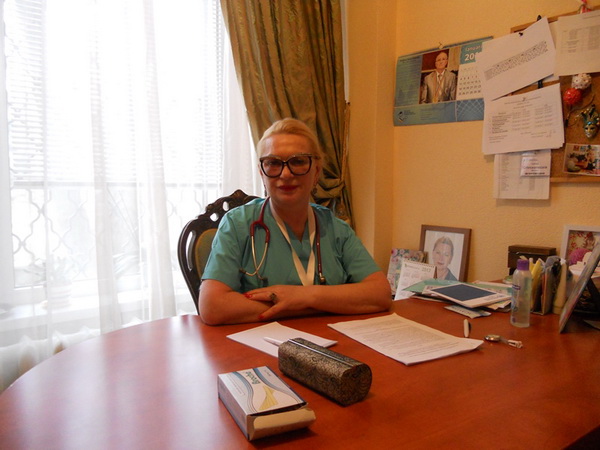
Crivceanscaia Larisa
1986 to present – Head of the Neonatal Intensive Care Unit, Institute of Mother and Child
PhD in medical sciences, associate professor at the Department of Neonatology of the Nicolae Testemițanu University of Medicine and Pharmacy, neonatologist of the highest category
She has published 57 scientific papers and co-authored 13 textbooks, 6 clinical guidelines, 18 methodological materials and 15 protocols.
1. International training: 2016, "Methods for improving mechanical ventilation", Regional Intensive Care Centre, Iași, "Gr. T. Popa" University of Medicine and Pharmacy, Iași. Dan Stewart
2. 30 April 2015. "2nd Mediterranean Pediatric Cardiology and Cardiac Surgery Workshop", Acıbadem University, Istanbul, Turkey
3. 11–13 February 2013. Scientific and practical trainer seminar "Methodology of simulation courses", School of Public Health Management of Moldova, University of Geneva, Switzerland.
4. 27 June 2013. Continuing education course "Simulation in continuing medical education, ethical aspects of neonatal malformations", Văratec, Romania.
5. 11–14 June 2013. Simulation-based training in emergency obstetrics, CESIMED – Centro de Simulação do Porto, Portugal
6. October–November 1999. Placement in the Intensive Care Department, Misgav Ladach General Hospital, Jerusalem, Israel.
7. 1997. Vienna, Austria. New technologies in neonatology.
The Neonatal ICU opened in 1984. Doctors Eleonora Andrievici, Valentina Malvinova and Gheorghe Pleșca and nurse Ecaterina Bogza have worked there ever since.
Good things come through hard work and diligence, and we must mention the contribution of PETRU STRATULAT – Doctor Habilitatus in medicine, professor, First Deputy Director for Research of the Scientific Research Institute for Maternal and Child Health Care, acting director of the Institute from May 1998 to the end of 1999, Head of the Department of Neonatology of the Nicolae Testemițanu SUMPh and chief non-staff neonatologist of the Ministry of Health.
Professor Petru Stratulat is rightly regarded as the coordinator of the regionalised perinatal care system, the development of national perinatal policy, the training of about 7,000 obstetricians, neonatologists, family doctors, perinatal service managers, midwives and nurses, and the promotion of evidence-based technologies recommended by WHO (1998).
The unit works according to 35 standardised protocols, whose authors include the unit's own doctors: L. Crivceanscaia, L. Moldovan, V. Sisoev and D. Cozma.
Doctors: Ina Sîrghe, Ludmila Brunchi, Larisa Moldovan, Larisa Crivceanscaia
Dr Inga Todorova, nurse Elena Matei
The Neonatal ICU is divided into 2 sections: the ventilation section and the intensive care section.
The ventilation section has 6 beds. 8 neonatal intensive care doctors currently work there:
Ludmila Brunchi – highest category, placement 2014 Russia (Moscow)
Inga Todorova – highest category, placement 2013 Russia (Moscow)
Victoria Sisoev – 1st category, doctoral student; placements: 2007 USA, 2008 Switzerland, 2016 France,
Larisa Moldovan – 1st category; placements: 2013, 2014 Austria
Daniel Cozma – 1st category,
Vidaico Olga,
Sirghe Inna,
Colodrovschi Ana.
Doctor: Victoria Sisoev
Doctor: Daniel Cozma
Doctor: Ana Colodrovschi
The intensive care section has 12 beds. 4 doctors work there
Eleonora Andrievici – highest category, placement 1989 Kyiv
Ludmila Anton – highest category,
Valentina Malvinova – highest category, placement 1989 Kyiv
Gheorghe Plesca – highest category.
Doctor: Eleonora Andrievici
Doctor: Ludmila Anton
All doctors of the 1st and highest category take duty shifts for the AVIASAN air ambulance service.
There are also 21 nurses, 13 of the highest category and 2 of the 1st category, and 11 orderlies.
Nurses: Alexandra Guțan, Aliona Catruc, Cristina Cușnir, Aliona Cervatiuc, Elena Cebotari
Nurses: Ala Derin, Aurica Balan, Valentina Cumpănă
The Neonatal ICU cares for all babies needing special treatment and care who are born at the Institute or transferred by the AVIASAN service. About 1,000 babies are admitted each year.
For newborns who need special care after birth, our maternity unit has a Level III intensive care section with modern equipment.
It is the only unit in the Republic of Moldova able to provide qualified medical care and high-quality nursing to babies with very low and extremely low birth weight.
Over the last decade, mortality associated with preterm birth has fallen considerably thanks to available, low-cost measures.
In 2012, according to the Ministry of Health, the survival rate of babies with a birth weight under 1,000 g was 43.7% and for 1,000–1,499 g about 80.6%, compared with 2000, when survival was about 1.64% for babies under 1,000 g and 52.2% for 1,000–1,499 g. It must be acknowledged that survival of babies under 1,000 g admitted to the Intensive Care Unit of the PMSI IMC remains low, although it has risen by 35% over the last decade. Survival in this group increased specifically after 2006, with the introduction of new, highly effective technologies.
MEDICAL SERVICES provided in the unit:
- Resuscitation in the delivery room
- Mechanical ventilation
- Surfactant administration
- Parenteral nutrition using infusion pumps
- Central catheterisation of umbilical veins and arteries
- Exchange transfusion for haemolytic disease
- Phototherapy
- Immunological blood grouping and subgrouping
- Peripherally inserted central catheter placement
- Mechanical ventilation with all the necessary monitoring
- Transfusions
permanent access to the hospital's clinical laboratory and radiology service;
Newborns who stay in intensive care are looked after by doctors specialised in neonatology and neonatal nurses. They receive clinical examination, laboratory and paraclinical tests, monitoring of vital functions and specific treatment (temperature control, oxygen therapy, IV fluids for metabolic and fluid-electrolyte balance, phototherapy, IV medicines, etc.).
Most babies admitted to intensive care return to their mothers once their health problems are resolved.
Premature babies (gestational age under 37 weeks) or those with low birth weight (under 2,500 g) stay longer in intensive care. Bigger babies are usually admitted for birth-related complications. Some need extra oxygen until the fluid in their lungs from life in the womb is absorbed. Others need antibiotics for a maternal-fetal infection, especially when the mother's waters broke more than 18 hours before birth or she had a fever in labour.
Nurse: Ecaterina Bogza
For premature babies, the length of stay in intensive care depends on birth weight and degree of immaturity. As a general rule, discharge is close to the date when the baby would have been due.